
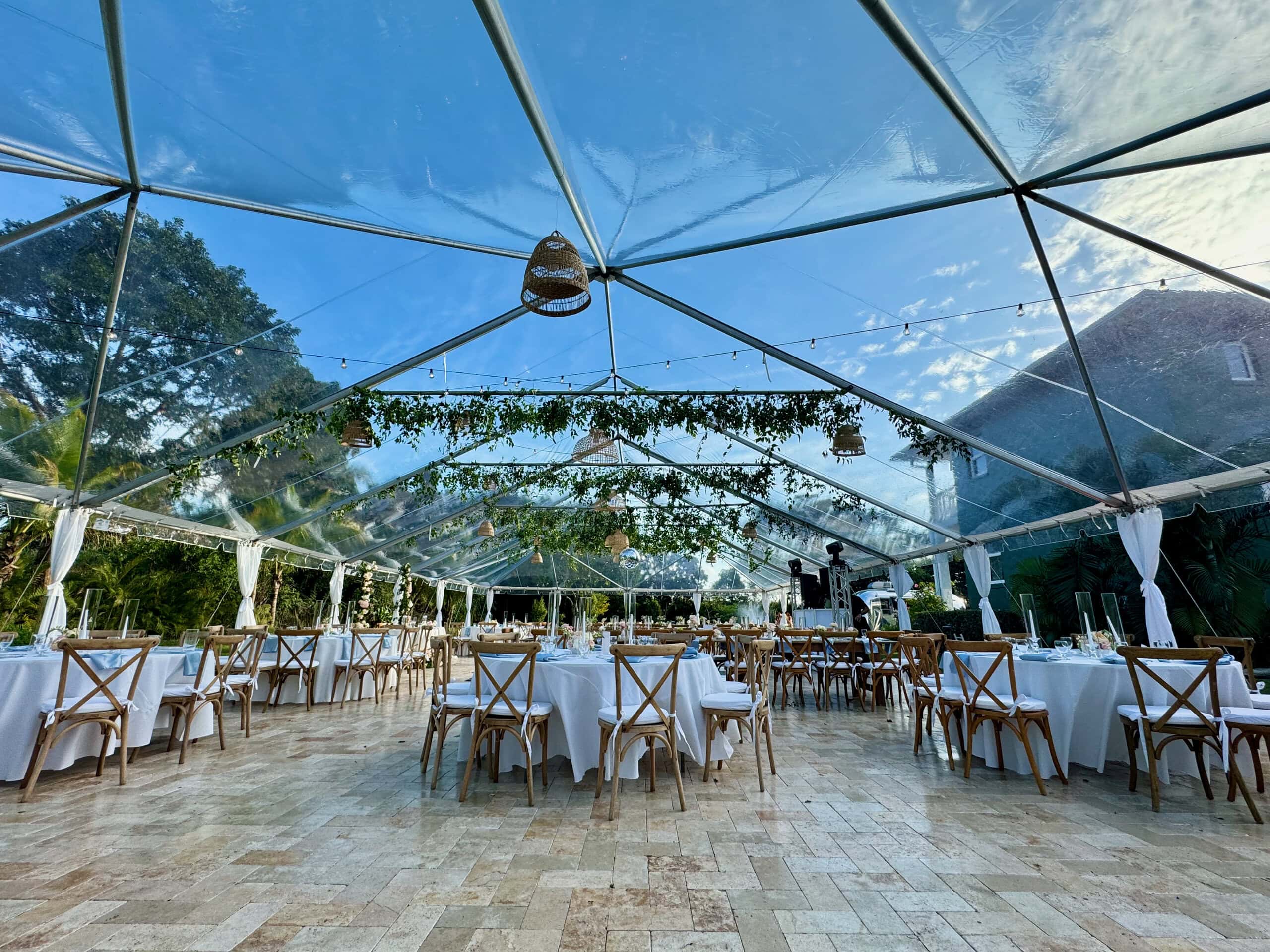
A garden tent wedding blends the romance of an outdoor garden celebration with the structure, comfort, and intentional design of a professionally tented reception space. Rather than hosting a wedding entirely indoors. Couples are choosing to celebrate beneath clear-top or sailcloth tents placed within landscaped estate grounds. Therefore, allowing them to remain immersed in nature without sacrificing layout control, climate planning, or elevated décor installations.
Several key factors contribute to the rise in garden tent weddings. Tented receptions allow for custom floor plans, overhead lighting installations, suspended greenery, and seamless transitions between ceremony, cocktail hour, and dinner—all while maintaining protection from sun, rain, or evening humidity. Unlike casual backyard setups, modern garden tent weddings are production-driven environments supported by flooring systems, airflow planning, and integrated power for catering, entertainment, and lighting.
In South Florida, this wedding style works well due to year-round greenery and large private estates. The subtropical climate also supports outdoor celebrations. A tented garden reception provides shade during the day. It also creates a more controlled environment for evening events. Guests can enjoy the open air while staying comfortable.
This guide explores what defines a garden tent wedding, the most commonly used tent styles in garden settings, décor considerations, and planning factors couples should evaluate when hosting an outdoor estate wedding in South Florida.
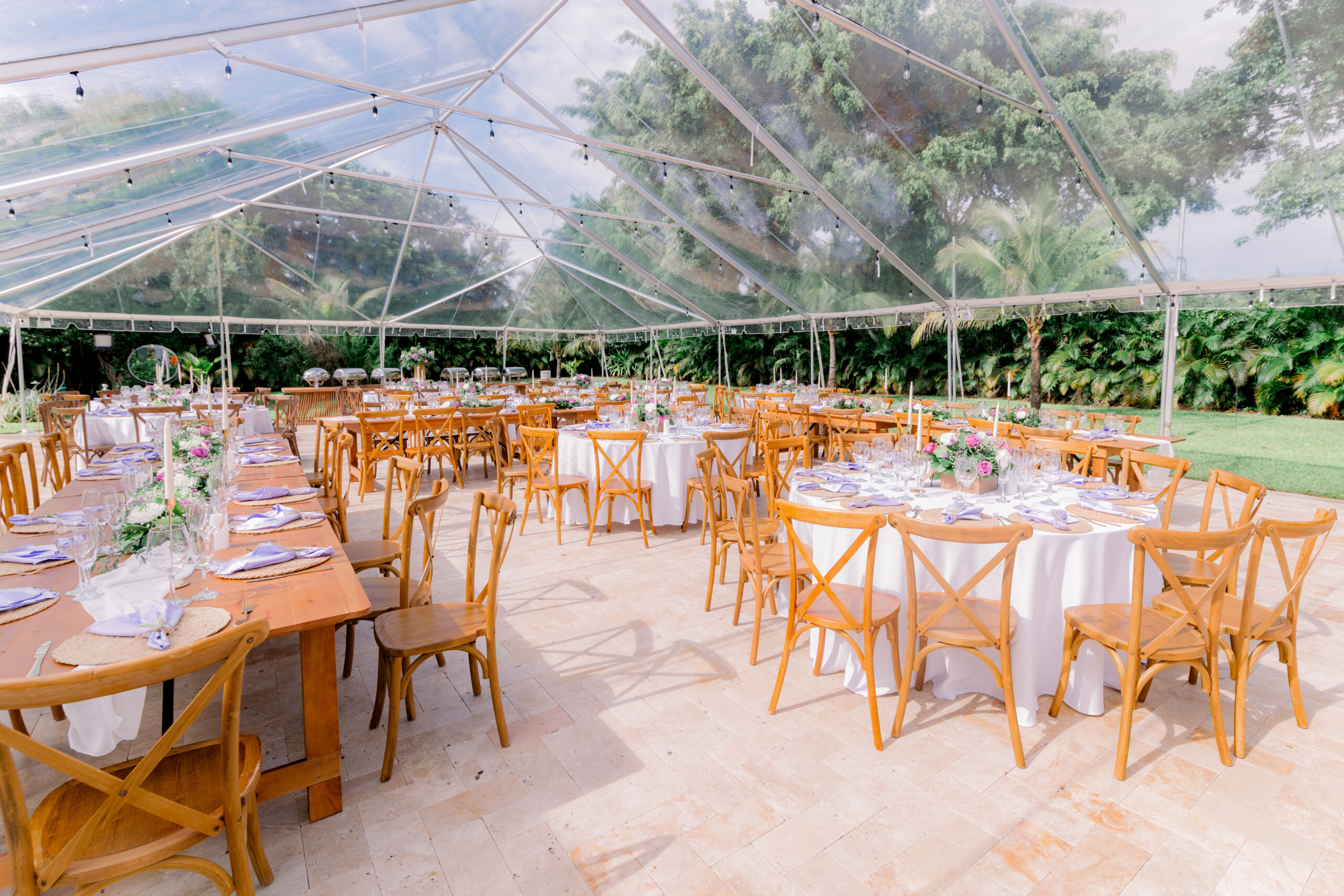
A bright and airy summer reception under a clear-top tent, featuring wooden chairs, pastel florals, and lush garden views.
Key Design Factors That Shape a Garden Tent Wedding
While the setting and tent structure define the overall style, several operational and design considerations determine how a garden tent wedding ultimately functions for both guests and vendors. Unlike fixed indoor venues, tented garden receptions require intentional planning around layout, lighting design, flooring systems, and climate management to ensure a seamless experience throughout the event.
For example, guest flow between ceremony, cocktail hour, and reception spaces must be mapped in advance—especially when transitioning from open garden areas into a tented dining environment. Similarly, overhead installations such as greenery, chandeliers, or café lighting often need to be coordinated alongside power access and tent rigging plans to maintain both visual impact and structural safety.
These elements work together to transform a tented garden space into a fully realized reception environment that can support catering operations, entertainment setups, and formal dining layouts without compromising the open-air atmosphere that makes garden tent weddings so appealing.
Why South Florida Is Uniquely Suited for Garden Tent Weddings
Beyond favorable weather conditions, South Florida offers a distinct advantage for couples considering a garden tent wedding: access to private estate venues designed with outdoor entertaining in mind. Many properties throughout the region feature expansive lawns, hardscape reception areas, wrap-around verandas, and flexible outdoor spaces that naturally accommodate tent installations without disrupting the surrounding landscape.
This type of built environment allows garden tent weddings to move beyond temporary backyard-style setups and function more like a fully integrated reception space. Existing features such as travertine terraces, landscaped courtyards, and dedicated vendor access points can support flooring systems, catering operations, lighting designs, and entertainment equipment, reducing the challenges of off-site tented events.
Additionally, South Florida’s rising trend of multi-day stays and private-property wedding formats aligns well with tented garden receptions. Couples hosting wedding weekends or Airbnb weddings often benefit from the flexibility a tent provides, allowing ceremony and reception environments to evolve across the property while maintaining a cohesive guest experience.
For venues like Saint Patrick Palace, where outdoor layouts and event infrastructure are already in place, garden tent weddings can be implemented with a higher level of efficiency and design continuity—supporting both aesthetic goals and operational requirements.
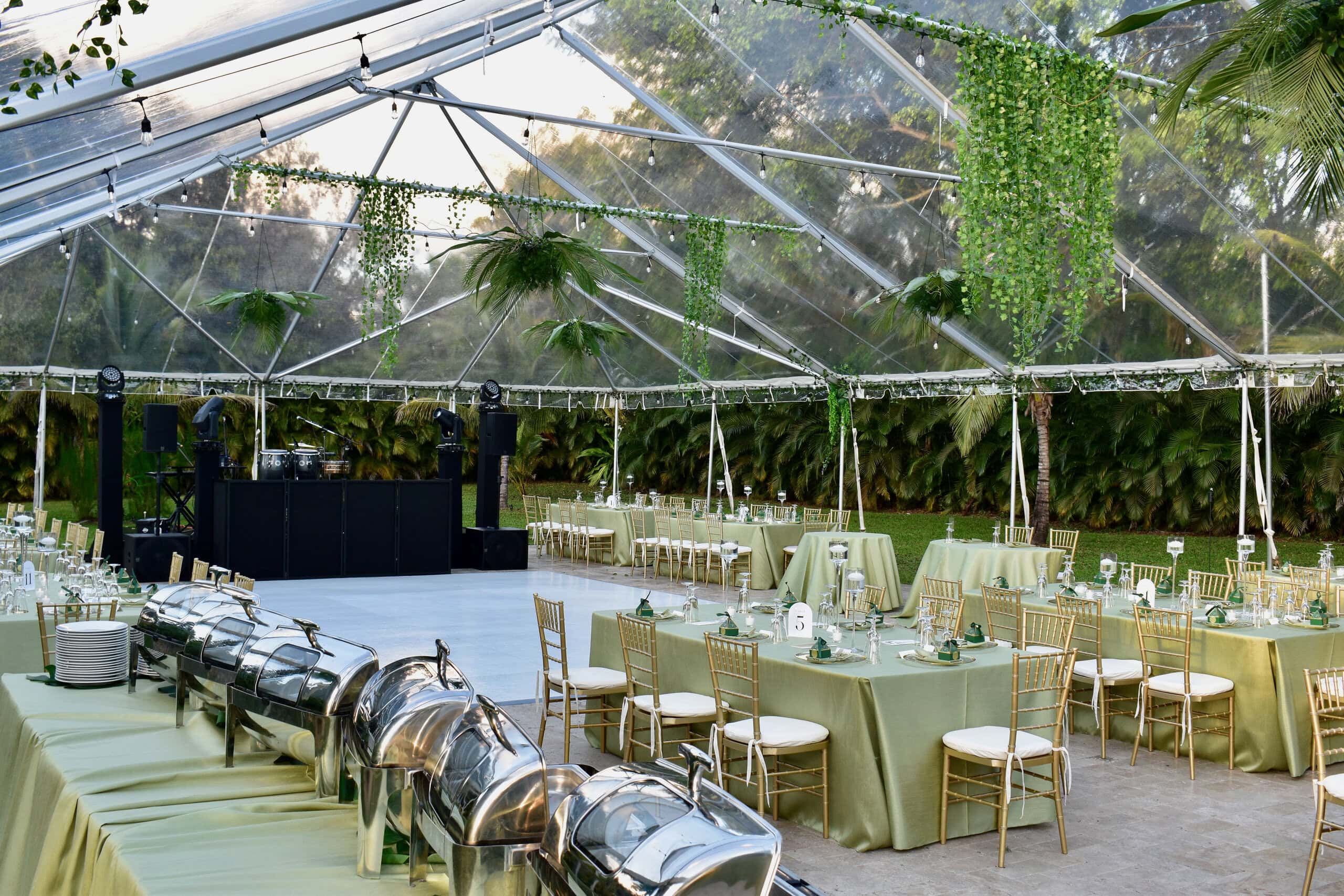
Clear-top garden tent wedding with dance floor and DJ setup under hanging greenery
Popular Tent Styles for Garden Tent Weddings
Selecting the appropriate tent style is one of the most important design decisions when planning a garden tent wedding. The structure you choose will influence not only the overall style of the reception but also how lighting installations, suspended décor, airflow, and guest seating layouts are ultimately executed within the space.
While several tent types are available, most garden tent weddings in South Florida are hosted beneath clear-top, sailcloth, or cathedral-style frame tents—each offering distinct visual and functional advantages depending on the scale and design priorities of the celebration.
Clear-Top Tents
Clear-top tents are one of the most frequently selected options for garden tent weddings, particularly for evening receptions. Their transparent roof panels allow natural daylight to filter into the tent during cocktail hour while showcasing overhead installations such as café lighting, chandeliers, or suspended greenery once the sun sets. This creates a layered indoor–outdoor experience that maintains visual connection to surrounding gardens throughout the event.
Sailcloth Tents
Sailcloth tents are often chosen for their soft peaks and flowing fabric canopies, which complement garden environments with a more romantic, European-inspired style. Their semi-translucent material diffuses sunlight during daytime celebrations and produces a warm glow after sunset—making them especially popular for ceremony or cocktail hour spaces within a tented garden layout.
Cathedral or Frame Tents
Cathedral-style or engineered frame tents offer the most flexibility for larger garden tent weddings. Their interiors are fully open and unobstructed. This allows for large dance floors, lounge areas, and buffet or plated dining layouts. It also supports extensive lighting and greenery installations. Because there are no center poles, sightlines remain clear across the entire reception space.
Lighting & Décor for Garden Tent Weddings
Lighting is one of the most impactful elements of a garden tent wedding. Since the tent replaces traditional walls and ceilings, lighting defines the mood of the entire event.
Popular garden tent wedding décor elements include:
-
Bistro or café lights for a warm, intimate glow.
-
Crystal chandeliers for formal elegance.
-
Greenery installations and floral chandeliers.
-
Draping, fabric treatments, and soft uplighting.
-
Custom dance floors and lounge seating.
When paired with surrounding gardens, these details create a layered, bright atmosphere that feels both luxurious and natural.
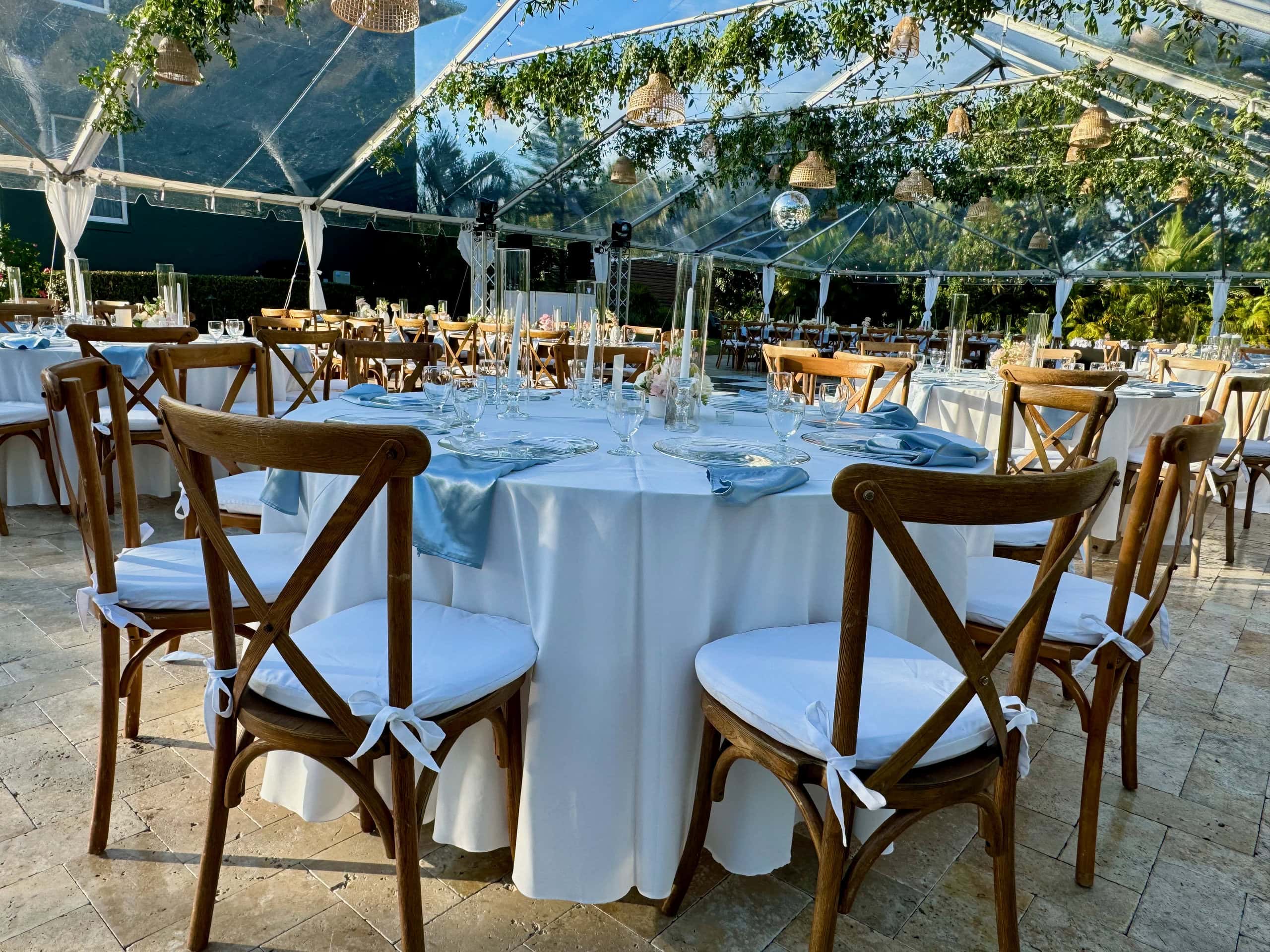
Garden tent wedding table with white linens and cross-back chairs under a clear tent
Comfort & Climate Planning Within a Garden Tent Environment
Guest comfort at a garden tent wedding is achieved through thoughtful planning and structural enhancements. These elements help maintain an open-air feel. At the same time, they support formal dining, entertainment, and extended evening celebrations.
Rather than fully enclosing the tent, many outdoor receptions use strategic airflow planning, elevated flooring systems, and open-sided layouts that promote natural ventilation throughout the space. This approach helps maintain a connection to the surrounding garden environment while supporting guest comfort throughout the day.
Additional upgrades may be added based on the season, guest count, or event duration. These can include portable cooling systems, discreet fans, or draped tent panels. Covered walkways can also be installed between the ceremony and reception areas. This helps guide guests as they move across the property. It is especially useful for multi-space estate celebrations.
When implemented thoughtfully, these elements allow a tented garden reception to support both aesthetic goals and functional requirements without compromising the open-air atmosphere that defines the garden tent wedding experience.
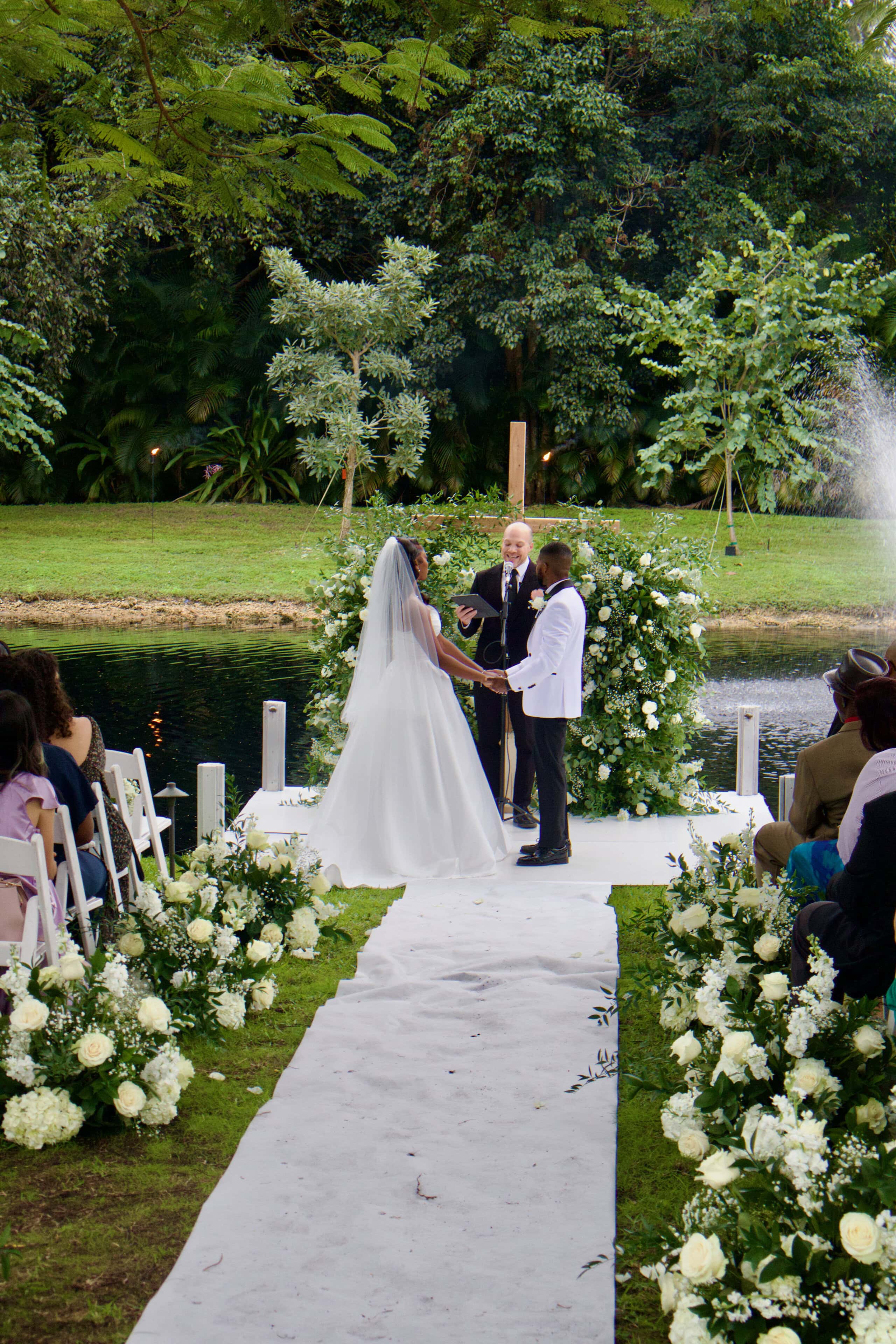
Outdoor waterside wedding ceremony with floral aisle and pond backdrop at Saint Patrick Palace in Davie, Florida
Garden-Forward Enhancements Couples Love
Garden tent weddings allow couples to fully embrace the outdoor setting through curated upgrades such as:
-
Floral ceremony arches framed by greenery.
-
Garden lounge areas for cocktail hour.
-
Water features, fountains, or reflective ponds.
-
Live musicians during ceremonies or the cocktail hour.
-
Candlelit garden pathways and outdoor bars.
These details elevate the experience while maintaining a seamless flow between nature and design.
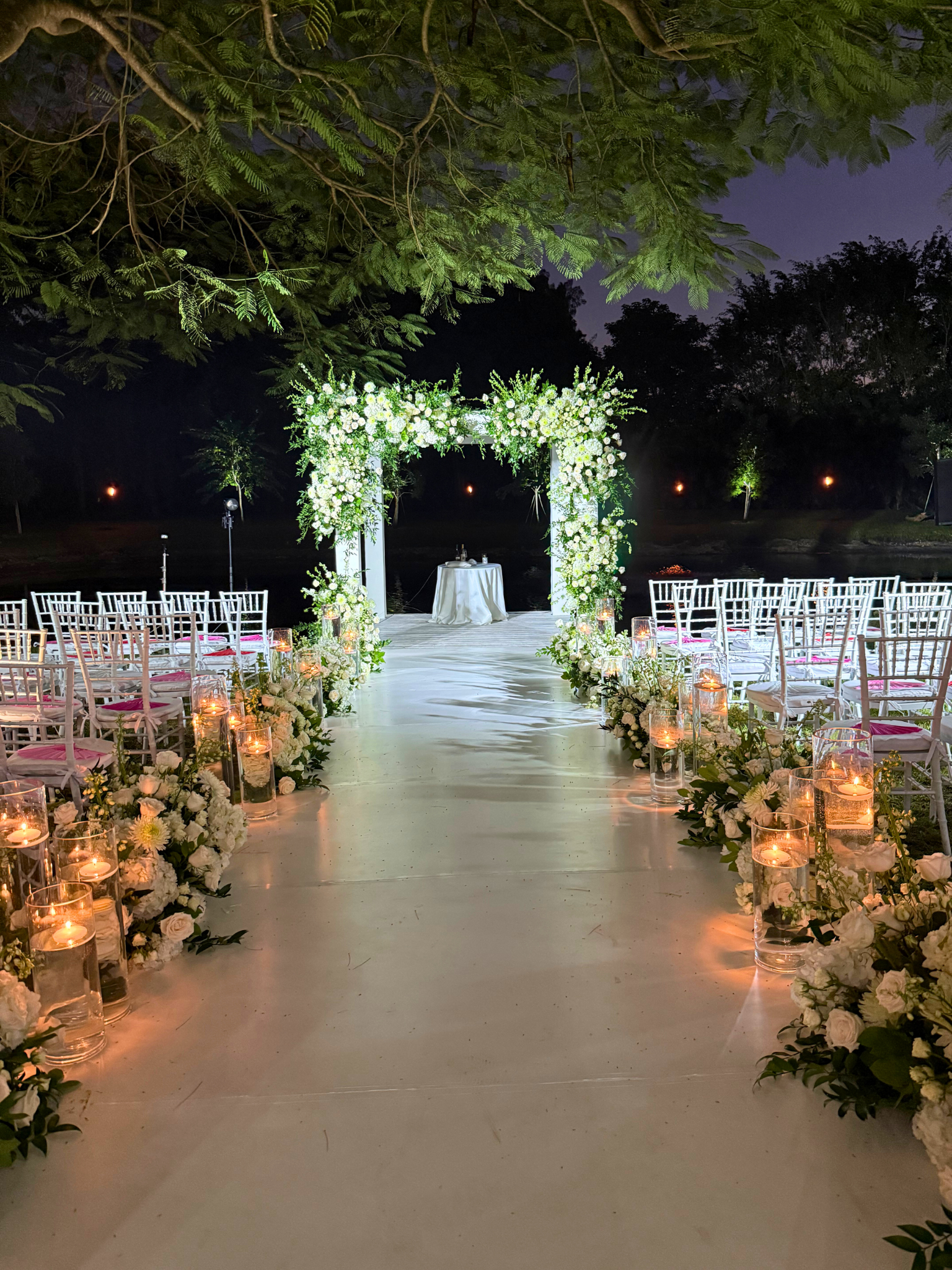
White floral chuppah with candles lining the aisle during an elegant evening ceremony at Saint Patrick Palace in South Florida.
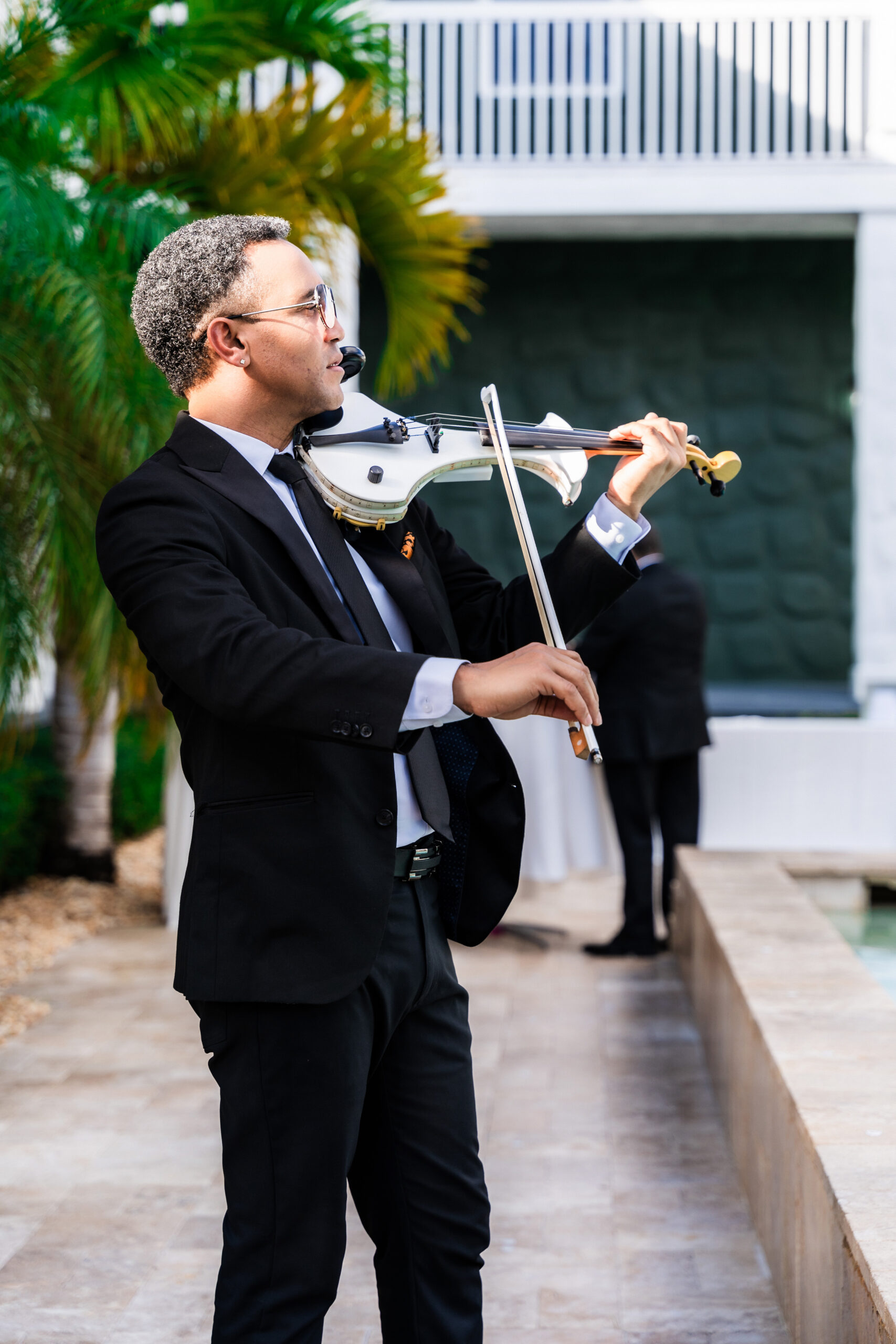
Violinist performing at luxury Airbnb wedding venue in South Florida | Saint Patrick Palace.
Planning Considerations for a Garden Tent Wedding
Planning a garden tent wedding typically involves coordinating across multiple outdoor areas, particularly when the ceremony, cocktail hour, and reception are distributed across a private estate.
One key consideration may include confirming access to power sources for lighting and entertainment installations. Another is mapping guest movement between the garden and tented areas and identifying appropriate vendor load-in points that minimize disruption to the landscaped grounds. Adequate time for tent installation, flooring placement, and overhead décor rigging should also be incorporated into the event timeline. Especially important for larger guest counts or multi-day wedding celebrations.
When hosted at a venue experienced in tented events, many logistical requirements are built into the layout. This allows the reception to feel like a natural extension of the property rather than a temporary installation.
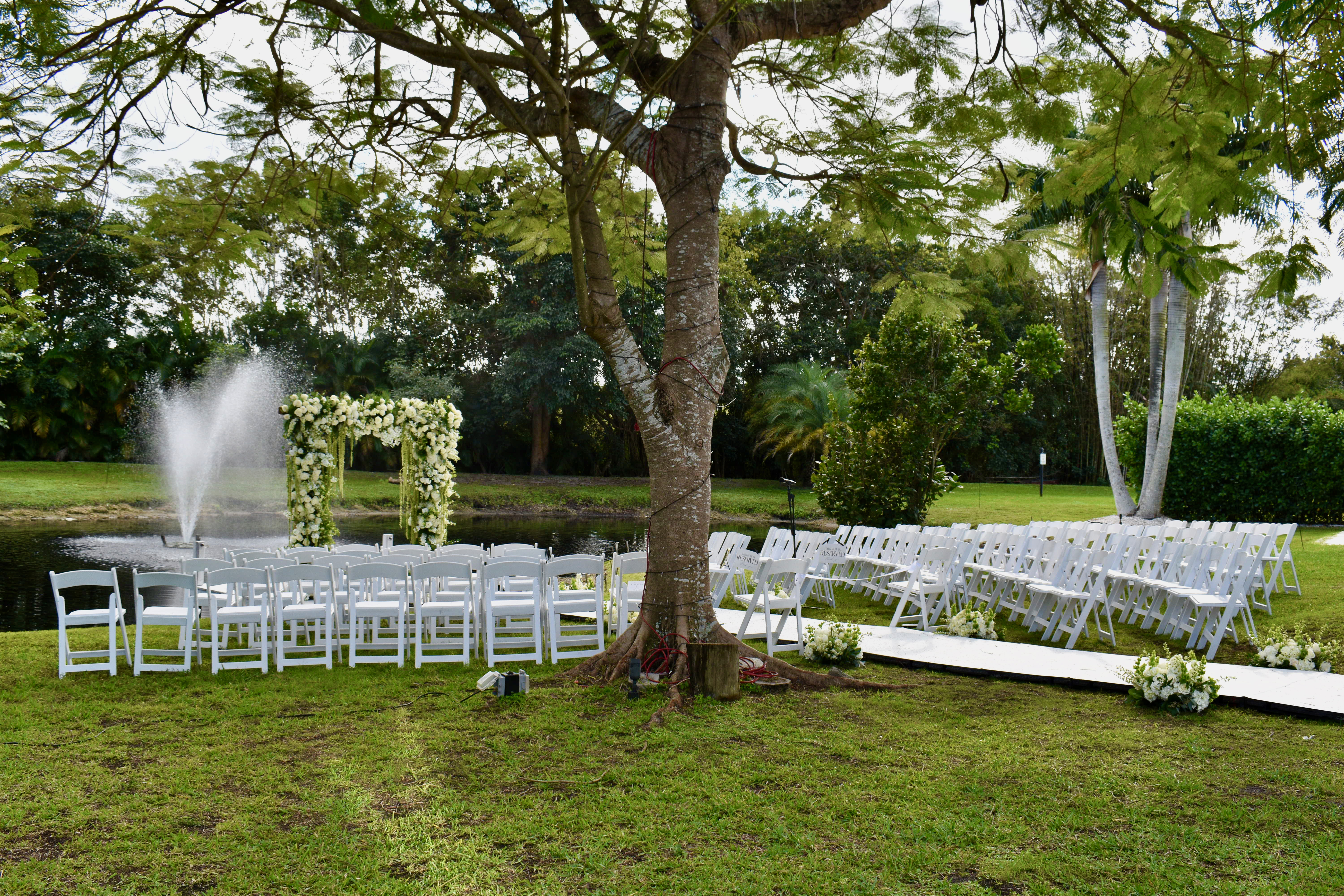
Outdoor estate wedding ceremony seating with a floral arch beside a pond in a garden setting
Why Saint Patrick Palace Is Well-Suited for Garden Tent Weddings
Saint Patrick Palace provides a private-estate environment for tented garden receptions. It supports both design flexibility and operational efficiency. The property includes landscaped ceremony areas, hardscape reception surfaces, and transitional outdoor spaces. These features support tent installation, flooring systems, and lighting design without major site adjustments.
Garden ceremonies, cocktail hours, and tented receptions can be positioned across the estate. This layout helps maintain guest flow throughout the event. It also supports catering operations, entertainment setups, and formal dining layouts. This integrated approach allows tented outdoor receptions to feel cohesive. The tent becomes an extension of the venue rather than a temporary structure.
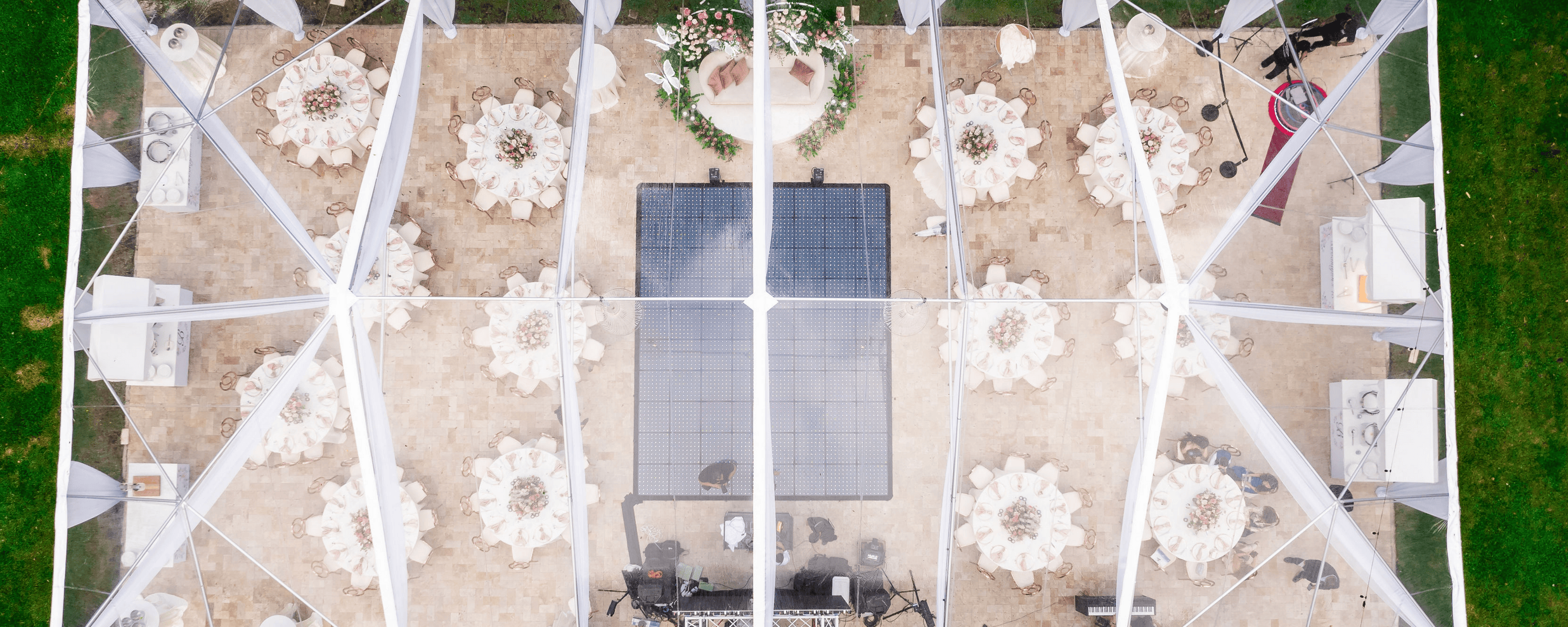
Proper floor planning ensures a smooth staff service flow and comfortable guest spacing.
Final Thoughts
For couples considering an outdoor estate celebration, a garden tent wedding offers a unique level of flexibility. It allows for formal dining, entertainment, and curated guest experiences in an open-air setting. At the same time, the environment remains intentional and refined. When supported by thoughtful layout planning, proper lighting infrastructure, and coordinated installation timelines, a tented garden reception delivers the best of both worlds. It captures the beauty of an outdoor setting while meeting the functional standards of a traditional indoor venue.
In regions like South Florida, where private estates and landscaped event grounds are well-suited to tent installations. This wedding style continues to provide an adaptable framework for couples seeking a more personalized approach to hosting their celebration.