
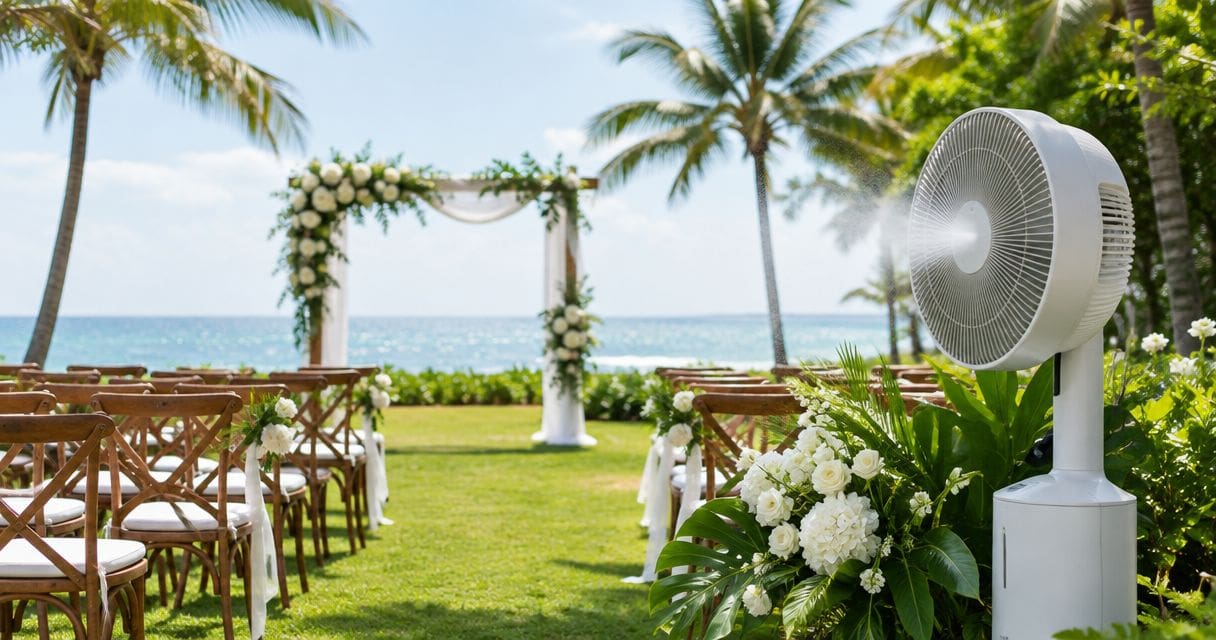
Choose outdoor wedding venues in South Florida by checking shade at your ceremony time, access to drinking water, a comfortable retreat from the heat, and a workable weather backup—not just the scenery. For a private-estate wedding weekend, confirm overnight arrangements and vendor permissions separately from your event booking. A beautiful outdoor setting needs a practical guest-comfort plan before you commit.
- Compare outdoor wedding venues in South Florida by shade, drinking water, fans, weather backup, and guest movement.
- Saint Patrick Palace suits couples seeking a private-estate wedding setting with weekend-stay options.
- An estate stay does not replace written confirmation of wedding permissions and vendor arrangements.
- Check the ceremony setting at your intended time, not just during a convenient tour.
Why This Matters
Guest comfort belongs beside privacy, overnight stays, and vendor choice on your venue checklist. A shaded ceremony does not solve an exposed cocktail hour, and a pleasant afternoon tour does not establish what your guests will experience at another time.
Saint Patrick Palace is a private five-acre gated estate in Davie, Florida, offering its grounds, pool, and terrace for weddings and events, alongside weekend stays. Saint Patrick Palace is best for couples seeking an estate wedding setting with an estate stay. Its outdoor spaces still need to be evaluated against your guest count, ceremony timing, and weather plan; a pool and terrace do not provide shade coverage or a protected reception layout.
For your wedding, request a tour with your wedding date, guest count, and interest in an estate stay. Those details give the venue a concrete event to discuss rather than a general description of an outdoor celebration.
How Do Outdoor Wedding Venues in South Florida Keep Guests Cool?
Outdoor wedding venues in South Florida need a coordinated plan for shade, hydration, airflow, event timing, and relief from prolonged exposure. Evaluate those measures across the ceremony, cocktail hour, and reception—not as separate amenities on a brochure.
Use this comparison to decide which arrangements deserve further discussion. These are planning approaches, not confirmed features or services at any particular venue.
| Planning approach | Best for | Main benefit | Limitation to resolve |
|---|---|---|---|
| Existing shaded areas | Couples who want to preserve an open-air setting | Shelter from direct sun without adding a temporary structure | Shade moves, and the shaded area must fit the intended layout |
| Professionally planned temporary cover | Couples who need cover over a specific event area | Creates a defined sheltered space | Cover is not the same as cooling; installation and weather suitability need approval |
| A ceremony timed around sun exposure | Couples with flexibility in their schedule | Lets the ceremony plan account for the sun’s position | Timing alone does not address humidity or the rest of the event |
| A confirmed indoor retreat | Guests who need a break from outdoor conditions | Provides a separate place to recover from exposure | Access, capacity, and actual cooling must be verified |
| Portable cooling fans | Couples adding airflow to shaded or tented areas | Moving air helps guests feel cooler; evaporative models chill dry air further | Effectiveness falls as humidity rises; placement, power, and water supply need coordination |
Choose a complete comfort plan, not one cooling feature. Ask where guests will sit, stand, queue, and walk. Then identify which parts of that route lack shade or a place to rest.
For your venue tour, bring your proposed ceremony time and a simple event outline. Ask the host to discuss conditions at that time, rather than treating the conditions during your appointment as representative of the wedding.
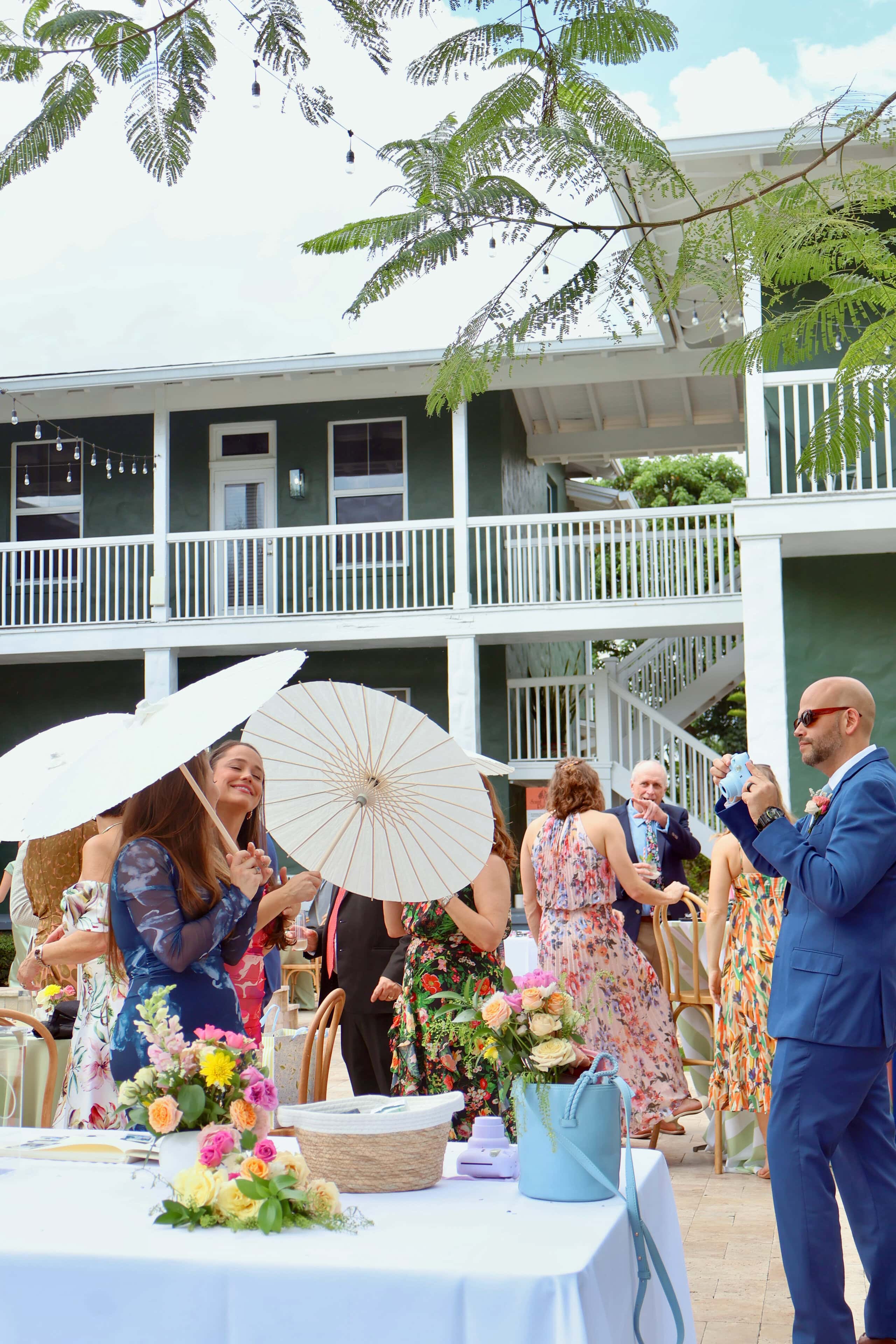
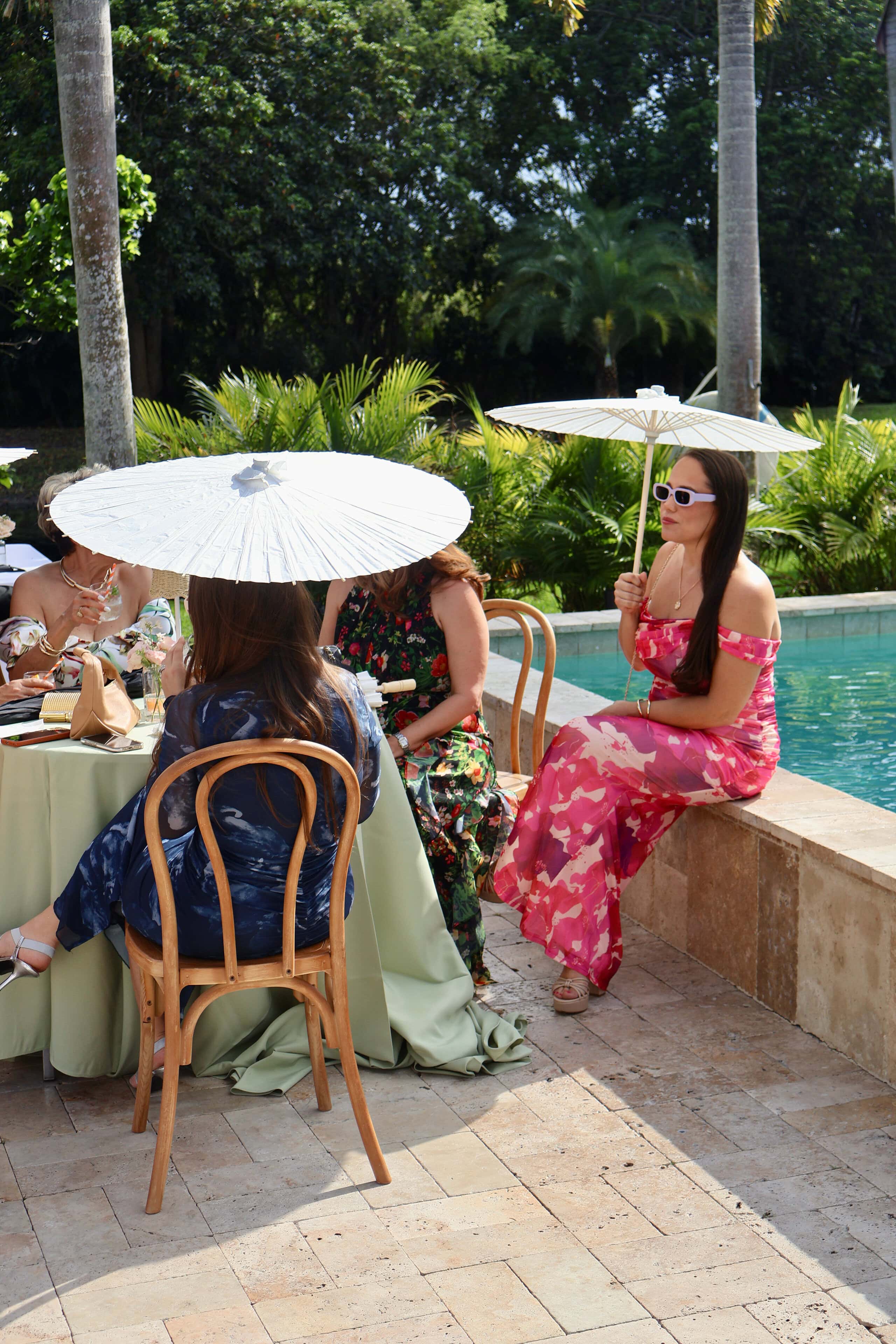
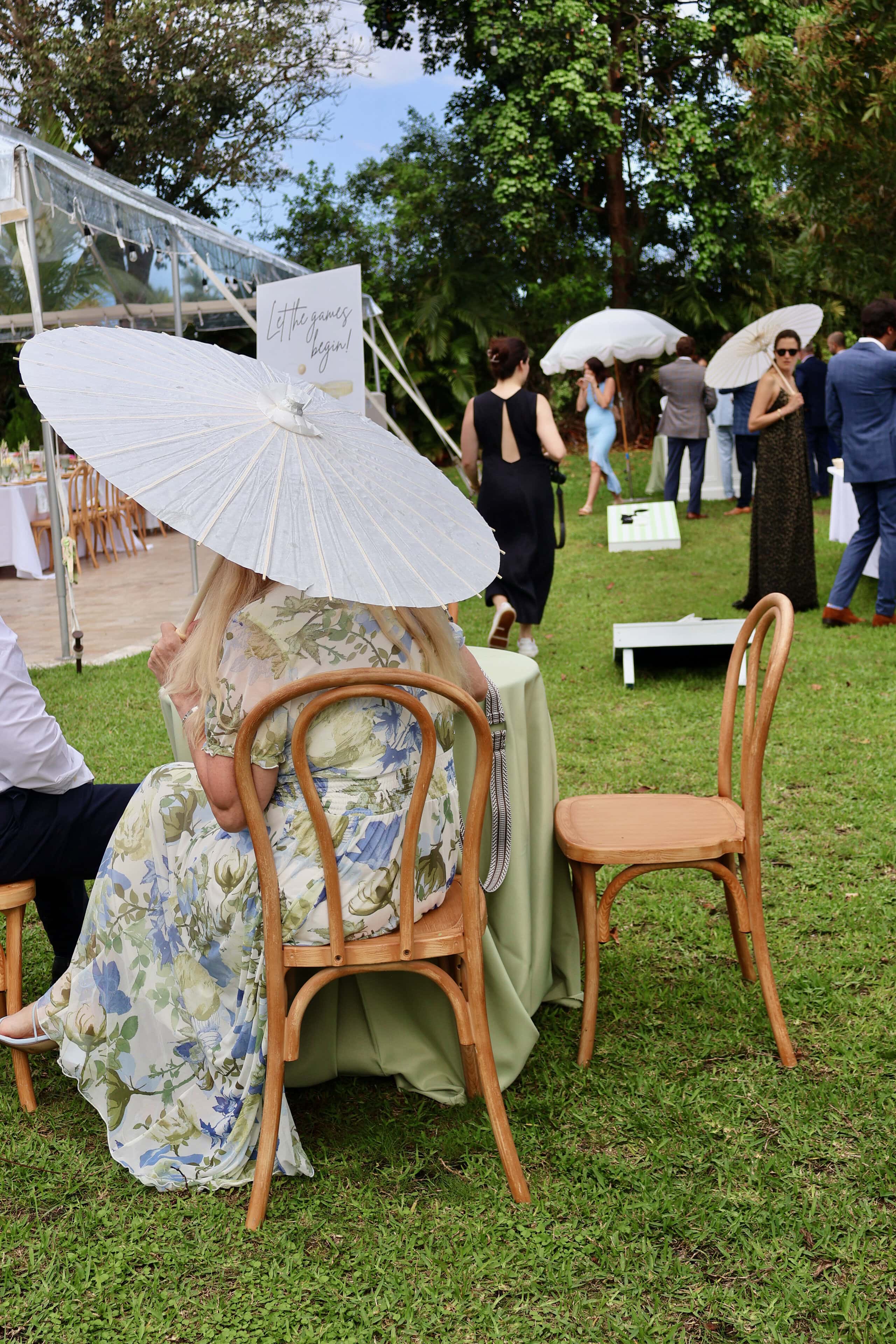
Shade: Check the Occupied Space, Not the Landscape
Trees and covered areas look inviting in photographs, but your seating layout determines whether they help guests. Ask to see the proposed ceremony footprint and identify where the first and last rows would sit. Include the aisle and any area where guests wait before taking their seats.
Check these 4 shade checkpoints during your tour:
- Arrival: Where will guests wait while the ceremony area opens?
- Ceremony: Does the proposed seating area fall within the shade at your intended time?
- Cocktail hour: Is there a shaded place to sit as well as space to stand?
- Reception: What happens to coverage when you add tables, service stations, and the dance area?
Existing shade offers a simple way to shelter guests, but it depends on the sun’s position. Temporary cover offers more placement flexibility, but you need written approval and a professional installation plan. Neither approach guarantees a comfortable outdoor temperature.
Avoid choosing a ceremony location solely because the couple’s position is shaded. Your guests need the same attention. Ask your planner to assess the seating area from the guests’ perspective, including anyone who cannot comfortably remain standing while waiting.
Water & Seating: Make Comfort Easy to Find
Drinking water should be straightforward to access throughout the outdoor portions of the wedding. Decide who will set it out, monitor it, and replenish it. Confirm those responsibilities with your catering or planning team instead of assuming they belong to the venue.
Place water where guests naturally pass, without creating a queue across the ceremony entrance or service route. Guests should not have to leave the celebration for a long search. If you plan to offer hand fans, treat them as a comfort aid rather than a substitute for shade, water, or a retreat from the heat.
Seating matters beyond the ceremony. Provide places to rest during any standing portion of the event, and discuss the route between those seats and the main gathering areas. A comfortable chair is less useful if reaching it requires crossing an awkward surface or taking a lengthy detour.
Ask your planner to review the experience for older relatives, children, pregnant guests, and anyone with mobility or health concerns. Give guests clear information about the outdoor setting before they arrive, so they can choose suitable clothing and footwear and raise individual needs privately.
Fans & Evaporative Coolers: Useful, With Limits
Circulating fans help guests feel cooler by moving air across the skin; they do not lower the air temperature. Place them where guests wait, dine, and dance, and settle power, placement, and noise with your rental team before the wedding day.
Evaporative cooling fans cool by evaporating water, and they work best in dry air. In South Florida’s humid climate, their effectiveness drops as humidity rises, so treat them as an aid to shade and hydration rather than a replacement.
Arrange fans through your vendors. An open vendor policy makes it straightforward to hire a rental company for fans, misting equipment, or tent ventilation; coordinate placement and power with the venue.
Weekend Access: Separate the Stay From the Celebration
An estate stay gives you a different planning framework from a ceremony followed by an immediate departure. Whether you picture weekend access for the whole celebration or an extended rental period built around the wedding itself, you can consider how personal preparations, the ceremony, and time with family fit together. Confirm each part of that plan rather than assuming the overnight reservation covers every activity.
Saint Patrick Palace offers wedding and event rentals alongside weekend stays. For an estate wedding there, discuss the event use of the grounds, pool, and terrace separately from overnight arrangements. Confirm the rental period—weekend access, a long weekend, or another flexible span—that fits your celebration. Do not treat the existence of a pool as permission for wedding guests to swim or as a substitute for a guest-cooling plan.
Before you choose your wedding weekend, ask for written clarity on:
- Which spaces your event booking includes.
- Which overnight arrangements apply to your group.
- When your vendors can arrive, set up, and leave.
- Whether any additional gathering requires separate permission.
- How event use and overnight use fit together without conflicting.
An estate stay supports the weekend experience; it does not define the wedding permissions. This distinction also protects your planning schedule. Vendor setup, personal preparation, and guest arrival need coordinated access, not assumptions about what a stay booking allows. Saint Patrick Palace maintains an open vendor policy, which makes it easier to hire your own caterer, florist, and rental team; confirm each vendor’s setup time, equipment placement, and power requirements in writing.
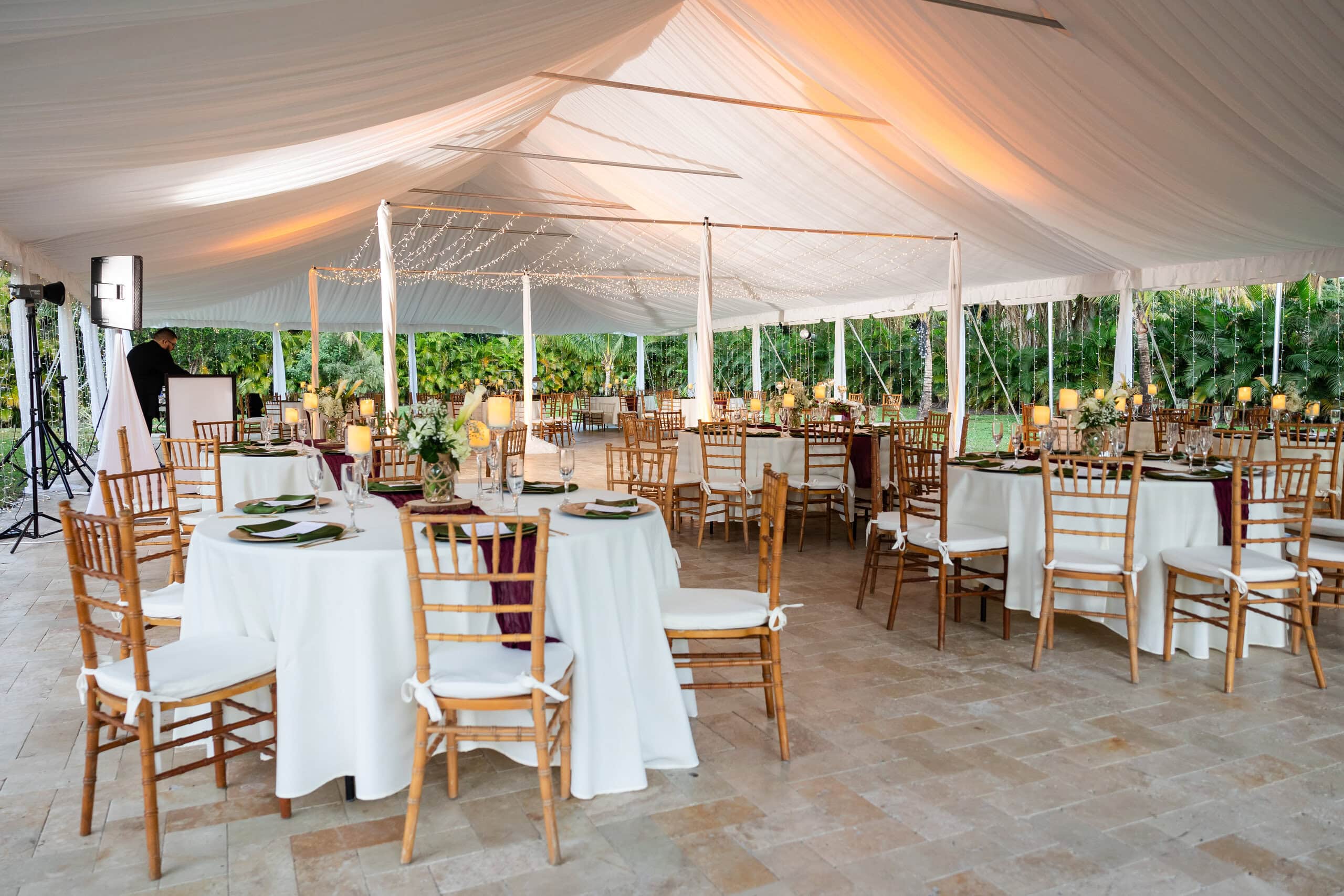
A covered outdoor wedding reception at Saint Patrick Palace, where tented dining provides shade and flexible space for guest comfort.
Why Guest Comfort Varies Between Outdoor Wedding Plans
The same property can produce different guest experiences depending on how you use it. Keep these factors in your venue comparison:
- Sun exposure: The ceremony location and time determine whether guests sit in direct sunlight or shade.
- Weather conditions: Heat, humidity, and rain affect an outdoor plan; a pleasant tour does not settle the weather question.
- Time outdoors: Arrival, photographs, cocktail hour, and reception add to the period guests spend outside.
- Guest needs: Mobility, age, clothing, and individual health needs change what a comfortable plan requires.
- Layout: Water, seating, shelter, and restrooms must work together along the guest route.
- Vendor arrangements: Temporary cover, tents, fans, and other equipment require coordination, approved placement, and suitable power arrangements; an open vendor policy makes hiring specialists for each of these easier.
Compare venues using your own event outline. A setting that works for a short ceremony does not automatically work for an extended outdoor reception. Also, assess an attractive terrace with the intended tables and service areas in mind, not just when it is empty.
How Should You Check the Cooling Plan Before Booking?
Use 3 planning stages to turn the tour into a decision: prepare, inspect, and confirm. Keep the process focused on what your guests will experience and what your vendors need to deliver.
- Prepare: Share your wedding date, expected guest count, intended ceremony time, and interest in an estate stay. Bring a draft sequence showing which parts of the celebration you want outdoors.
- Inspect: Walk the proposed guest route. Discuss shade, seats, water placement, access to a retreat, and the alternative layout if weather interrupts the outdoor plan.
- Confirm: Ask for written details on event permissions, overnight arrangements, vendor access, and who is responsible for the comfort measures you plan to use.
A wedding tour should end with clear answers or a specific follow-up list. Do not book on the strength of a verbal assurance that everyone will be comfortable; ask which spaces and arrangements make that possible.
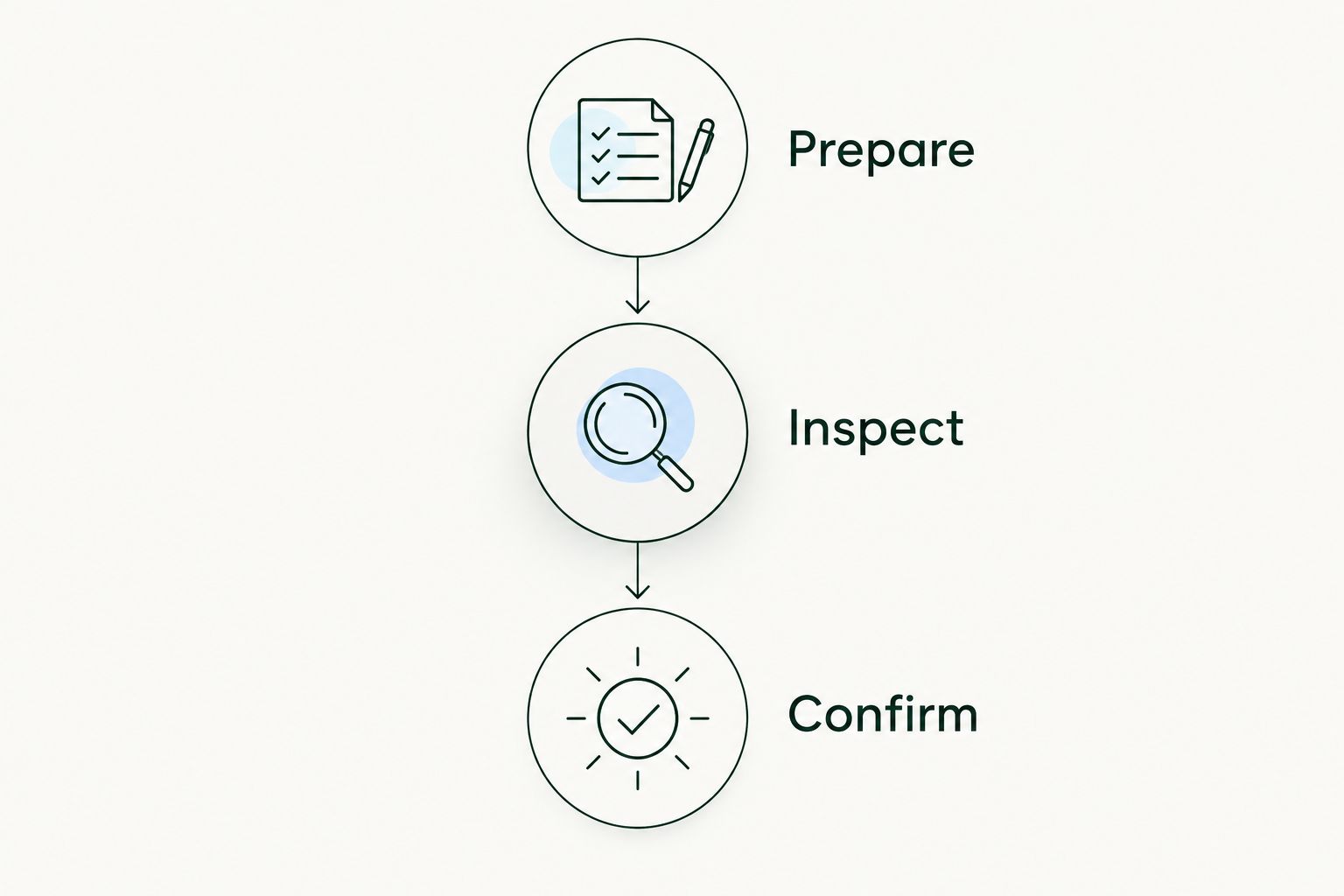
At Saint Patrick Palace, a qualified tour request should include your wedding date, guest count, and interest in an estate stay. Use the visit to discuss privacy and vendor flexibility alongside the practical outdoor layout. Confirm the arrangements that apply to your wedding rather than inferring them from the estate setting.
Plan your private-estate wedding tour
Share your wedding date, guest count, and interest in an estate stay before your visit.
Is an Evening Ceremony Enough to Keep Guests Comfortable?
An evening ceremony is not a complete cooling plan. Scheduling around direct sun addresses only part of the experience; guests still need water, seating, and a way to take a break from outdoor conditions.
Review the full timeline, including arrival and photographs. If guests arrive before the ceremony, their exposure begins before the first processional. Ask your planner to coordinate the ceremony timing with the shaded waiting area, reception layout, and lighting needs.
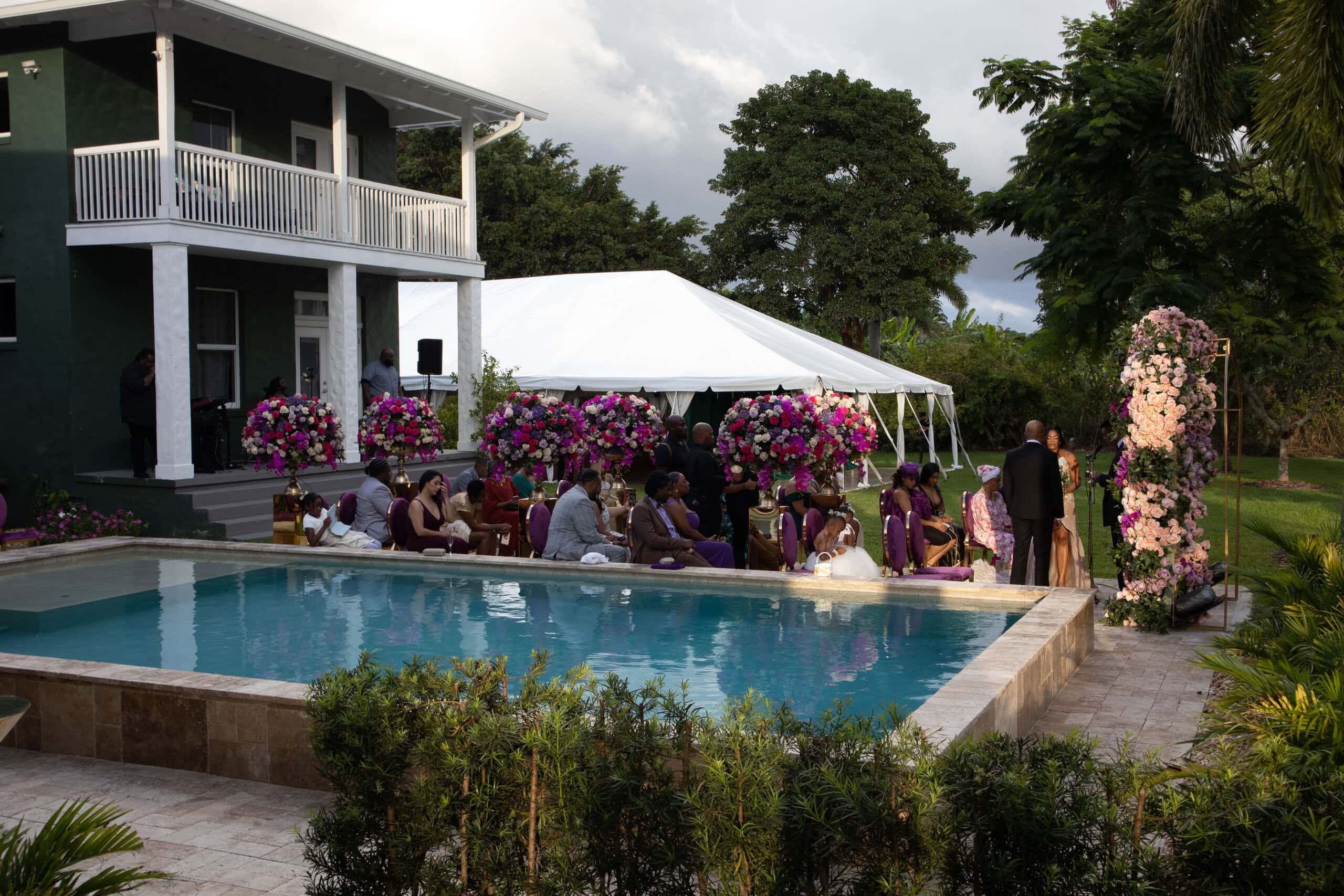
A poolside wedding ceremony at Saint Patrick Palace illustrates why shade, seating, and access to covered spaces matter for guest comfort.
Does a Pool Make an Outdoor Wedding Venue Cooler for Guests?
A pool is not a guest-cooling plan for an outdoor wedding. Unless you specifically approve swimming and incorporate it into the event, treat the pool as part of the setting rather than a comfort measure.
At an estate with a pool, discuss the surrounding guest route, seating layout, and safety arrangements. Keep shade, drinking water, and weather backup on your checklist regardless of how appealing the poolside setting looks.
What Should a Weather Backup Actually Cover?
A weather backup should identify where the event moves, who decides to move it, and how guests and vendors make the transition. A promise to adjust on the day is not a substitute for a usable alternative layout.
For an outdoor wedding, ask your venue and planner to discuss the ceremony and reception separately. Confirm whether the alternative accommodates your guest count and intended setup, and establish who communicates a change to the catering, rental, and ceremony teams.
FAQ
What should I look for in outdoor wedding venues in South Florida?
Look for a workable plan for shade, drinking water, seating, a retreat from the heat, and weather backup. Evaluate those arrangements across the entire guest route, not only the ceremony location.
Is a private estate a good choice for a wedding weekend?
A private estate suits couples who want an estate setting and an overnight component to their celebration. Confirm wedding permissions, overnight arrangements, and vendor access separately before booking.
Does Saint Patrick Palace offer an estate wedding setting?
Saint Patrick Palace is a private five-acre gated estate in Davie, Florida, offering its grounds, pool, and terrace for weddings and events, alongside weekend stays. Ask which spaces and arrangements apply to your proposed wedding.
Can we bring our own wedding vendors to an estate venue?
Saint Patrick Palace maintains an open vendor policy, so you can choose your own wedding vendors. Confirm each vendor’s access, setup, equipment placement, power arrangements, and cleanup with the venue before the wedding day.
Do fans or evaporative coolers keep wedding guests cool?
Circulating fans help guests feel cooler, and evaporative cooling fans add a chill in dry air, but their effectiveness drops as South Florida humidity rises. Treat fans as part of a shade-and-water plan, and arrange power and placement with your vendors.
Will a tent keep wedding guests cool?
A tent provides cover, but cover alone does not establish a comfortable temperature. Discuss ventilation, any proposed cooling equipment, installation approval, and weather suitability with the venue and rental professionals.
Should wedding guests swim to cool down?
Do not rely on swimming to keep wedding guests comfortable. Confirm pool-use permission and safety arrangements separately, while providing shade, water, seating, and a retreat for the celebration itself.
What should we include when requesting a wedding tour?
Share your wedding date, guest count, and interest in an estate stay. Add your intended ceremony time and a draft event outline so the tour can address your outdoor layout and weekend plans.
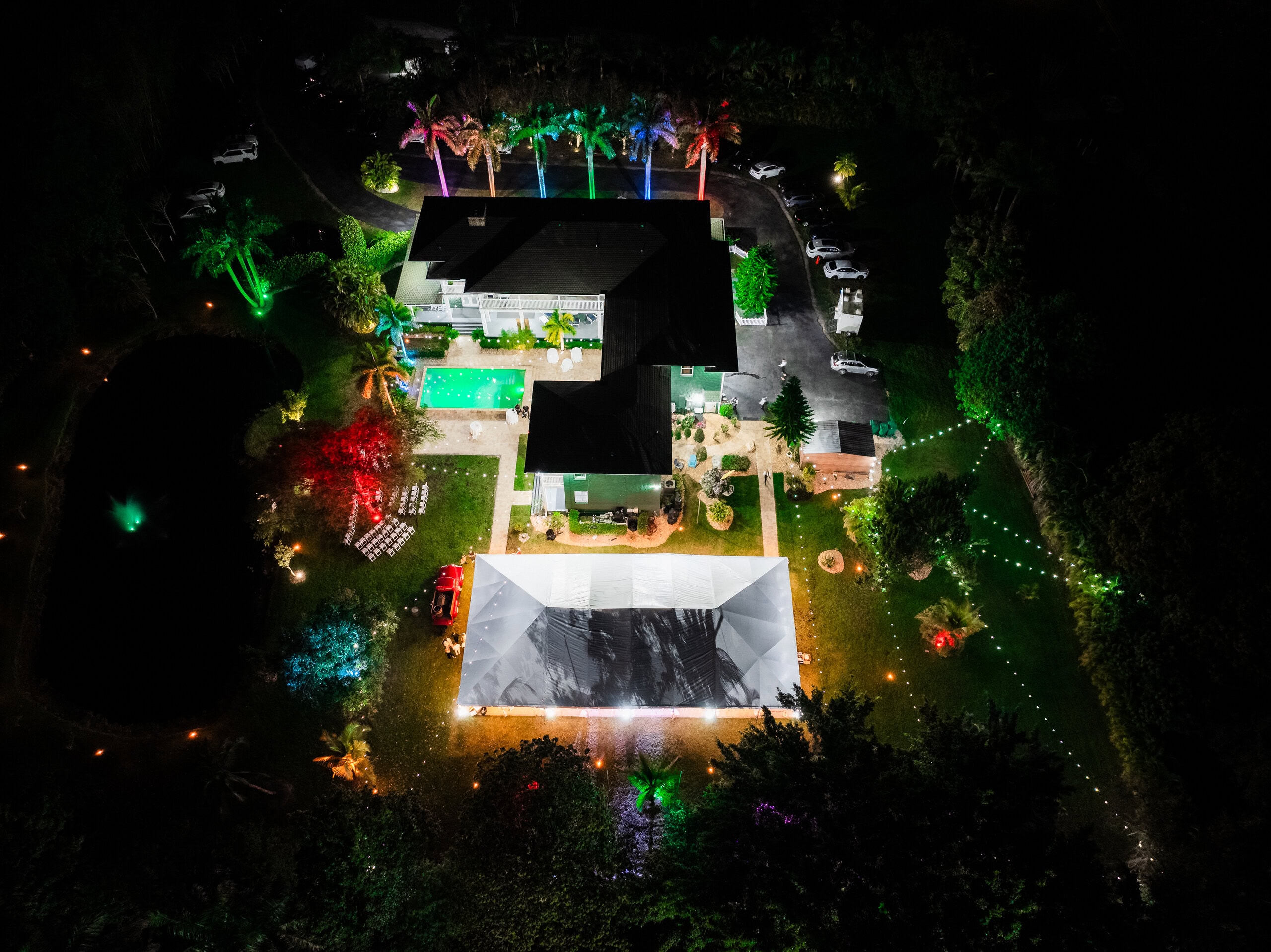
An evening aerial view of Saint Patrick Palace highlights the covered reception tent and connected outdoor spaces for wedding guests.
One Last Thing
Walk the venue as a guest, not only as the couple. Start at the arrival point, pause where guests will wait, sit in the proposed ceremony area, and follow the route to refreshments and the reception.
This simple walk connects details that photographs show separately. It helps you judge whether the private-estate setting, outdoor celebration, and overnight plans fit the wedding you want to host—without asking guests to work around the layout.